
Spotlight on
- British Olympic Swimmer Freya Anderson -
“Sometimes putting the brakes on and taking a step back can actually propel you forward.”
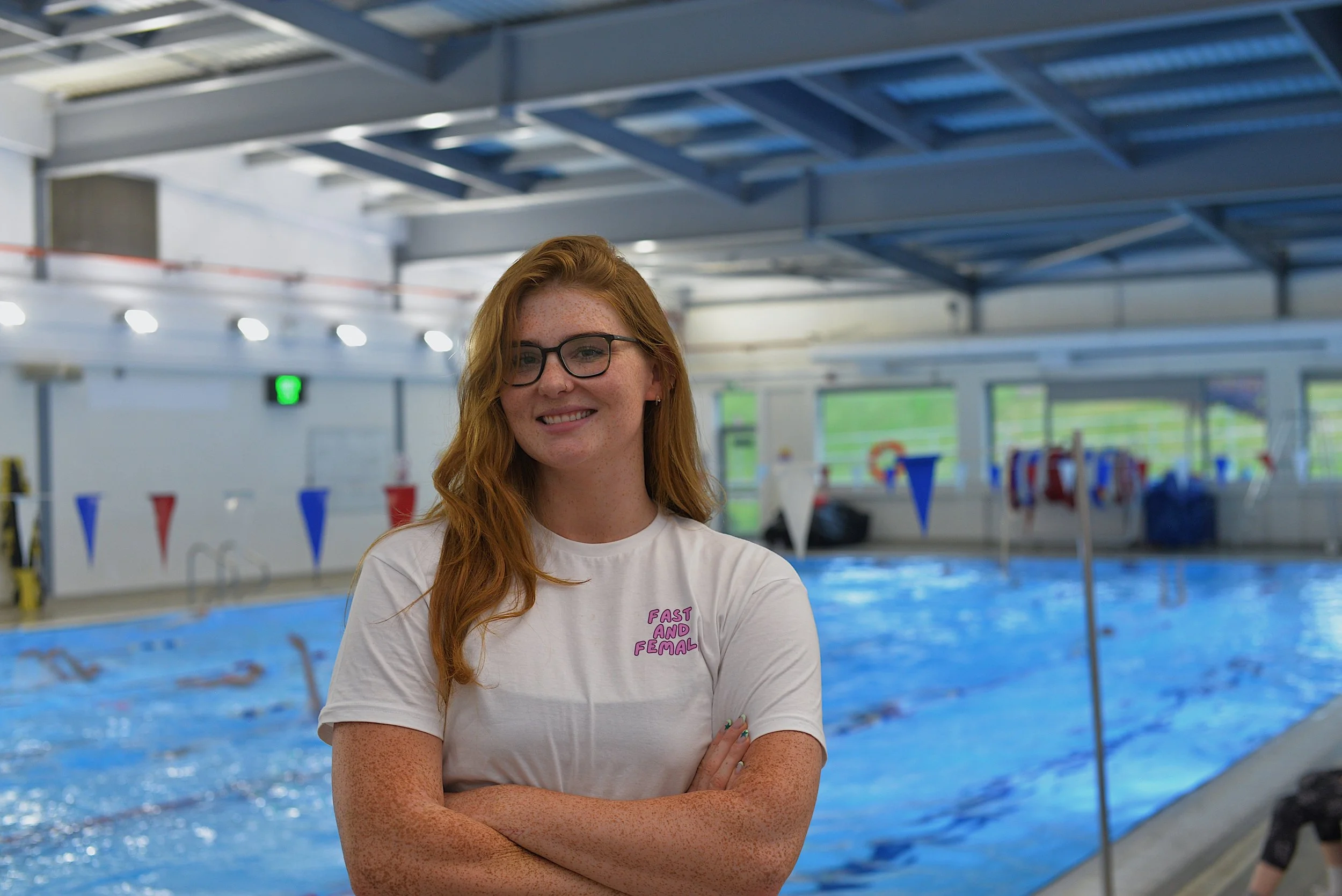
Optimise Team member, and former swimmer Hannah sat down for a chat with Freya Anderson MBE, a British freestyle sprint swimmer on the GB national team who is a passionate advocate for female athletes. Freya has multiple European and world individual and relay titles, including for the mixed 4x100m medley relay at the 2020 Tokyo Olympics
Does your menstrual cycle affect the way you train, fuel or recover and how does tracking play a role in your life?
I've just been diagnosed with endometriosis, so it's not the norm for me to have regular periods. I've been on my period when I've been racing and it's never affected my performance. But it does how your body feels with cramps, and feeling lightheaded or bloated. There’s a mental side too, you just want to wrap up in bed and not do anything but, you've got to push through and go training.
I track my cycle because of my endometriosis, which means my cycles aren't ‘normal’. Sometimes they are shorter, sometimes longer, so it’s nice to have a ‘guesstimate’ of when it might pop up. As well, I know my period is due when I'm craving certain foods, though that can also be a sign that I’m not tuning my body correctly. I do go based on feeling as well, because I know my body well. But I've also been on contraception since I was 16, so I've always been informed about period management because they were so heavy and unbearable to start with.
"It might be an uncomfortable situation, but you need to remember that most women have a period and it's nothing to be ashamed of."
〰️
"It might be an uncomfortable situation, but you need to remember that most women have a period and it's nothing to be ashamed of." 〰️
As you prepare for the 2028 LA Olympics, can you walk us through a typical training day and how has it changed since your school years?
It has changed very dramatically. Even just two years ago, in a week I was doing 10 swims, three gym sessions, pilates , and pre-pool work. Now I do six swims, two spin sessions, three gym sessions, and two ‘mini’ swims. A lot of that is down to the new training regime where I am now. There’s a lot of physiological stuff too, like markers for how your body is reacting to training. Apparently my body is very sensitive to workload, so we have to strain smarter, not harder, because my shoulders and my back can't take it. Then with my periods, we need to make sure I'm not exhausting myself. So it's changed so much, but definitely for the better. It's what suits my body.
What does nutrition look like for you on a regular training day, and what about the night before or morning of a competition?
I've just recently got my mindset into “I need to fuel to be able to train”. I've struggled a lot the last few years with energy availability and feeling tired. I used to not eat before morning training sessions , but now I have something, maybe just toast or something with protein to help recovery. One of the most important things as an athlete is the recovery. The hard work is important, but it's just as much about how you adapt afterwards. After a swim, I might have a bacon roll, then come home for beans on toast. For lunch, I have something quite normal, like avocado, chicken and rice..I've been trying to make dinner a bit nicer recently because I've got time in the evenings. So ramen noodles with chicken, stuff like that. And I just make sure I've got it all balanced.
On the morning of a competition, it depends on the schedule. If we have to be up really early, I tend not to eat as much because you want to feel comfortable and you've done the fueling the night or day before. So just some coffee and beans on toast.If it’s a major competition, you'd do a warm up, then have a banana or an energy bar, and maybe supplements like bicarbonate of soda or caffeine gum. There are little things that I'd never have thought about 10 years ago, like energy gels and electrolytes. Once you've done the morning swim, it's all about recovery. So you want to have a protein shake or other protein, then lunch. Normally we get a nice buffet because we're quite spoiled. So that's the fuel for the final. Then it's sort of the same again for the evening swim. Once you're done in the evening, it's just fuel as quick as you can and head to sleep.
What advice would you give to a younger swimmer who experiences heavy periods, cramps, or discomfort — similar to what you’ve faced?
I would say, even back when I was younger, I knew my body and I knew something wasn't right. It's taken me 8 or 9 years to get a clear diagnosis, so definitely trust your gut. I remember people telling me, “oh, it's fine” but I knew what was normal and what wasn't. And I think that came from maybe talking to my friends about it. I've also always been really open to my coach about it and I've only ever had male coaches. On the fast and female camps that I run, I try to really stress the importance of communication. It might be uncomfortable, but remembering that most women have a period and it's nothing to be ashamed of can make it easier to speak to guys about it.I was always scared that I was asking the doctor too much or feeling shut down or turned away when asking about periods, injuries or illnesses. But everything that I've ever said has turned out to be true. So, just keep talking.

You just want to wrap up in bed and not do anything but instead you have to push through and go training.
What’s your bedtime routine like?
Well, I could sleep for England. Being an athlete, the hard work is important but the recovery is so key to how you adapt to the training. It does vary. Some days I have big naps so I won't have that much sleep at night. But then yesterdayI went to sleep at about 8 p.m, and got about 10 hours of sleep. As long as you're in your bed and not walking around town or something, you're still resting and your body is recovering. That could also mean keeping chilled throughout the day and in the evening.
How do you find talking about your menstrual cycle with your coach? And what could we do to help more young athletes feel comfortable?/
I've always had male coaches. I know a lot of girls feel uncomfortable speaking to a male coach about it, but I've always had a great relationship with my coaches. Because my periods affect me day-to-day, I do talk to my coaches about it, but it's never been awkward. Like me and my previous coach would joke about it.. Every coach I've ever had has been compassionate. They've had female partners or swimmers before and they do know what period is, so it's not that big of a deal. I think it's all about communication.
It's important to talk about it openly. At the World Running Championships, one of our Team GB girls was saying she ran while she had her period and got a period PB! I think that needs to be more of that. In 2016, a Chinese swimmer spoke about having period cramps and she didn't expect to get a medal at the Olympics, but did. That may seem like, “why are we talking about it so openly? And why is it the first thing on your mind post-race?” But it makes it so much easier to talk about for younger girls and the people watching. I remember before I had started my period, I saw an article about Miley Cyrus having her period. And I was like, “Oh my God, she does! And she's a queen, so there's absolutely nothing wrong with it!” I think that really took away that stigma and taboo. So being open and honest,t makes it so much easier to talk about.
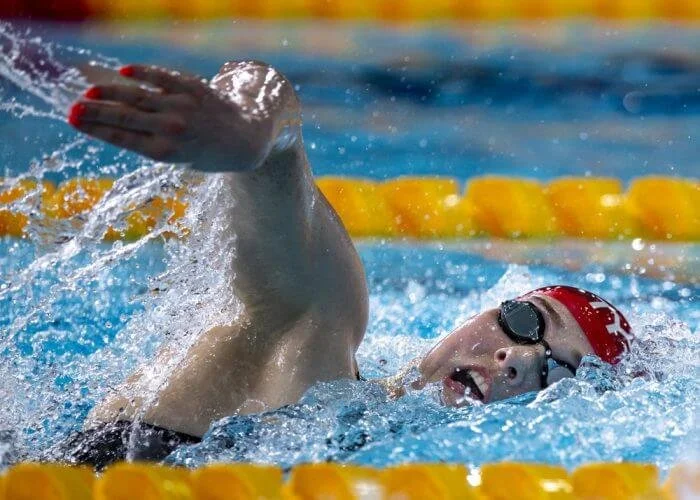

That's not really spoken about, those changes into having a womanly body……..just being open and honest about it makes it so much easier.
As your body has gone through puberty, how has that influenced your swimming, how you feel about your body as an athlete and what has helped you adapt?
Swimming is extreme because you are half-naked all the time. That is something that I've struggled with. I'm really tall and have a lot of muscle, so I weigh more than other girls. So I've always been like “Let's just not talk about that kind of thing.” I've been open with my coaches, but would never discuss it with my teammates. When I was 14 and really tall, I was really thin for 5-6 years. I was swimming well, I think I even got one of my PBs back then, and I've changed since then. I always joked that I had a second puberty at 21. I think that's not really spoken about, those changes into a womanly body. It definitely came as a shock, but it was just me developing into how I am now.
For someone who loves swimming but is finding it difficult to balance training, school, and their wellbeing — and is thinking of giving up — what would you say to them?
Communication, honestly, that's one of the key things to being an athlete - getting on the same page with your parents, teammates or coach. Being able to have open communication and asking for support when you need it, is one of the most important things. Even asking for help with things like “Oh, I've got an exam on this day. Can I move my training around?” When I was younger, I was told that if you miss one session it will take you four sessions to get back, and it's just not the case. Sometimes putting the brakes on and taking a step back can propel you forward. Being kind to yourself, like cutting yourself a bit of slack to get things done and get on top of things, is also so crucial. If your life outside of swimming is chaotic, then your swimming will be affected.
Do you notice any changes in motivation, resilience or mental wellbeing over your menstrual cycle?
At Fast and Female we talk about hormonal changes and that there may be times where you might not be as strong, but that doesn't really play a massive part. It can be the mental side too, like feeling groggy, down or uncomfortable is never going to be the best for performance. When I'm lacking motivation, it's great to have a goal in your head, even if you're sore or tired. Whenever I'm feeling sloppy and like, “I don't want to do it” I try to remind myself “this is why I'm here.” I think goal setting has really helped me to be able to pick myself up when I'm lacking motivation.
